Dearly Diary
The Beautiful Awkwardness of a First Letter
What do you write to someone you have never met when “Hello, here are several facts about me” feels less like romance and more like the beginning of a witness statement?
7 minute read · Letter-Writing Craft
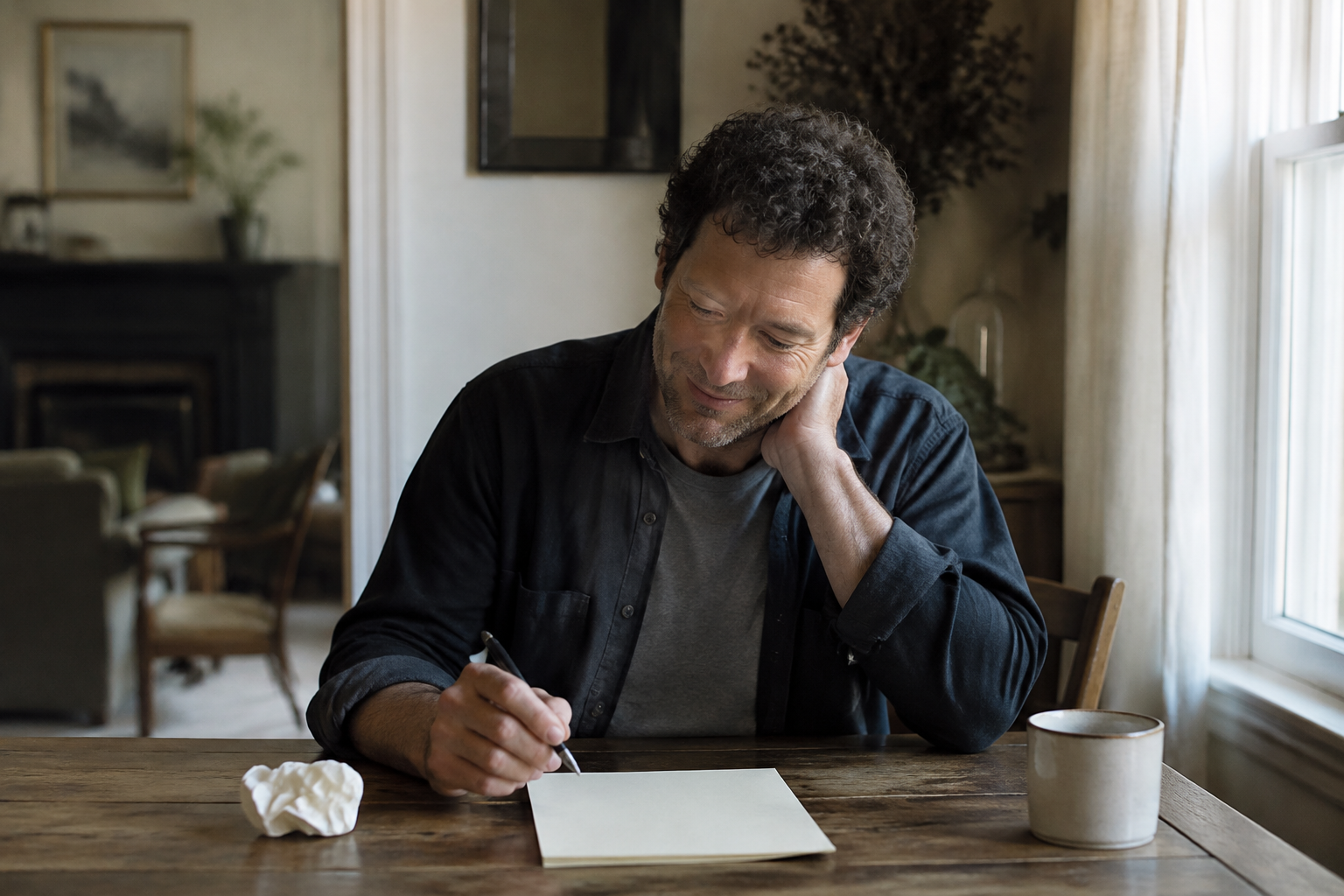
The first letter begins with a blank page.
Not a metaphorical blank page. An actual one.
Cream, perhaps. Slightly textured. Beautiful enough that making the first mark on it suddenly feels like an act of vandalism.
You sit down with a pen and the sincere intention of introducing yourself to another human being.
Then, almost immediately, you forget everything you have ever known about yourself.
- What do I enjoy?
- Have I always been this boring?
- Is “I like music” technically a personality?
- Should I mention the weather?
No. The weather sounds desperate.
You write “Hello.”
You look at it.
You consider starting over.
This is the beautiful awkwardness of a first letter: before there can be connection, someone has to be brave enough to begin.
The First Sentence Has Been Given Far Too Much Power
We tend to treat opening lines as though they must accomplish something extraordinary.
They should be clever—but effortless.
Warm—but not overly familiar.
Interesting—but not suspiciously rehearsed.
Perhaps funny, though preferably in a way that does not require the recipient to understand your extremely specific sense of humor before they know your last name.
This is an unreasonable amount of responsibility to place on one sentence.
The truth is that your first line does not need to sparkle. It only needs to open the door.
You can begin simply:
I’ve been wondering all morning how to begin this.
Or:
It feels strange and lovely to write to someone I haven’t met yet.
Or even:
Hello. I nearly ruined three perfectly good sheets of paper trying to think of a more interesting way to say hello.
Honesty is often more inviting than polish.
A first letter does not need a perfect beginning. It needs a human one.
You Are Not Writing Your Entire Life Story
Once the first sentence is safely on the page, another problem appears.
What should you include?
Everything feels either too insignificant or far too personal.
You could write about your work, but you do not want the letter to sound like a résumé. You could describe your family, but explaining the complete emotional architecture of your childhood seems ambitious for page one.
You could list your interests:
Books. Travel. Music. Long walks.
Congratulations. You have become every person who has ever completed a dating profile.
A meaningful first letter does not need to contain your entire story. It only needs to offer a few genuine places where another person might enter it.
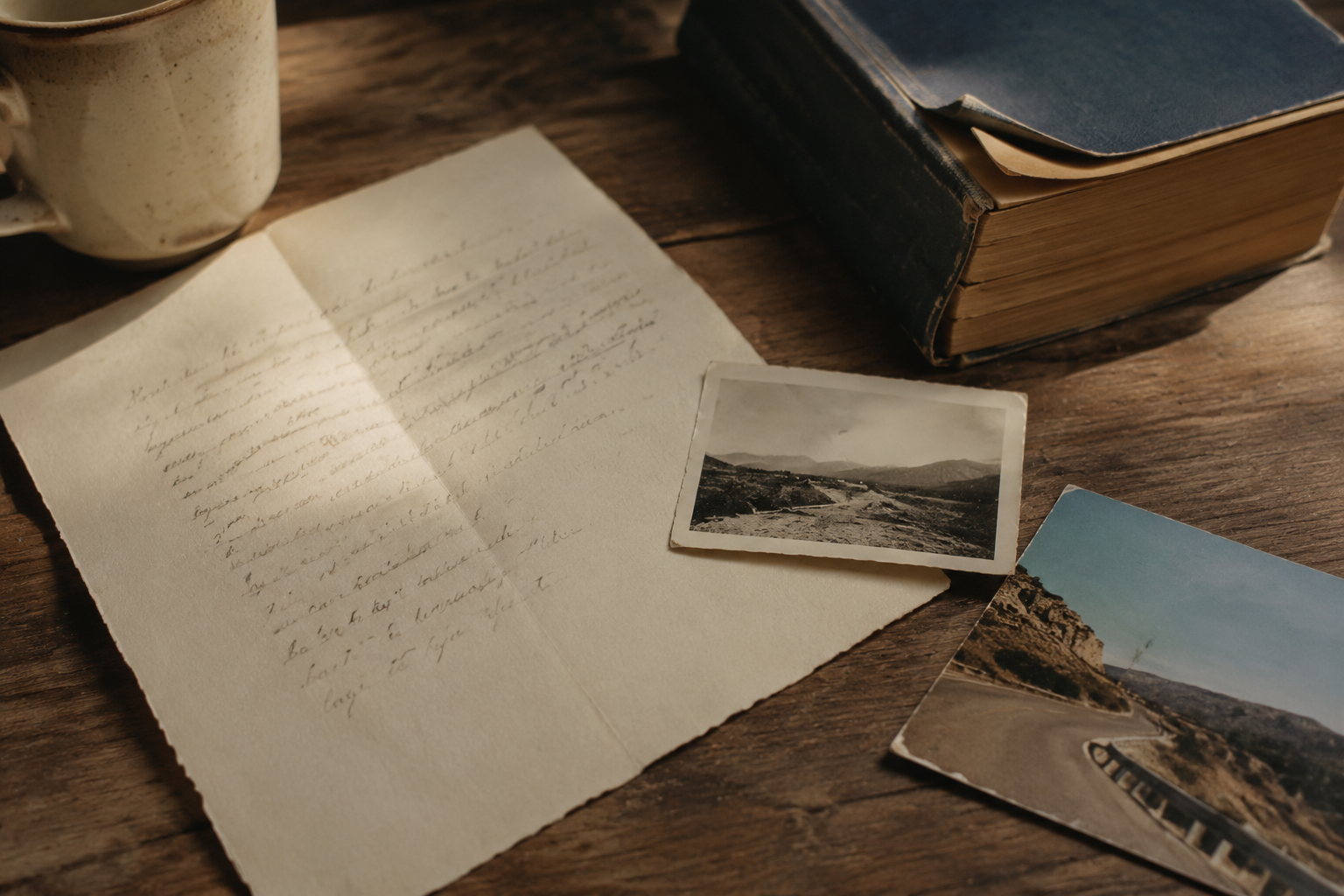
Instead of writing that you love books, tell them about the novel you have carried through three moves but still have not finished.
Instead of saying you enjoy traveling, describe the small roadside town you think about more often than the expensive destination you once planned for months.
Instead of announcing that family is important to you, share the Sunday ritual you would miss if it disappeared.
Details give another person something to see, feel, and respond to.
Facts describe us.
Stories introduce us.
Write the Things That Sound Like You
There is a peculiar temptation, when writing to someone new, to become slightly more sophisticated than we are in ordinary life.
Suddenly, we do not eat breakfast. We “begin the morning.”
We do not watch television. We “occasionally enjoy a beautifully made series.”
We have never once yelled, “Where are my keys?” while holding them.
A first letter can make us feel as though we should present the best possible version of ourselves.
But the best version is not necessarily the most polished one.
It is the most recognizable.
If you are funny, be funny.
If you are thoughtful, allow yourself to take your time.
If you are nervous, you may say so.
If you have messy handwriting, let it be messy enough to be yours—though ideally not so mysterious that the recipient must involve a pharmacist.
The goal is not to sound impressive. The goal is to sound like someone worth knowing.
A polished performance might earn admiration.
A recognizable voice creates closeness.
A First Letter Is Not a Job Interview
It is natural to want to ask questions. Questions keep a handwritten conversation moving and show that you are genuinely interested in the person receiving your letter.
But there is a difference between curiosity and an intake form.
- Where did you grow up?
- What do you do?
- Do you have siblings?
- Where do you see yourself in five years?
- Please describe a time when you overcame adversity.
At some point, the recipient may begin wondering whether health insurance is included.
The best questions do more than collect information. They invite a story.
Instead of asking, “Where are you from?” you might ask:
What is something about the place where you grew up that you didn’t appreciate until you left?
Instead of, “What do you like to do?” try:
What is something you can spend an entire afternoon doing without noticing the time?
Instead of asking for a list of favorite things:
What is one ordinary thing that always makes your day better?
A thoughtful question says more than Tell me something.
It says I would like to understand how you see the world.
And if the right question does not come easily, that is perfectly normal. Dearly members receive a small collection of thoughtful prompts and conversation ideas each month—not scripts or assignments, simply gentle starting points for the moments when a blank page feels particularly blank.
What if the first conversation had room to become something meaningful?
Dearly creates thoughtful introductions through handwritten correspondence, allowing two people to meet beyond photographs, profiles, and hurried first impressions.
Leave Something for the Next Letter
A first letter does not need to answer every possible question.
In fact, it should not.
Part of the pleasure of handwritten correspondence is that every exchange leaves something unfinished. A story to continue. A question to consider. A detail that makes the recipient curious about what else there is to discover.
You are not creating a complete record of yourself.
You are beginning a conversation.
Think of the first letter as opening a few windows rather than throwing open every door in the house.
Share enough to be known a little.
Ask enough to show genuine interest.
Leave enough unsaid that writing back feels natural.
A first letter is an invitation, not an autobiography.
The Crossed-Out Word Is Not a Disaster
At some point, you will make a mistake.
You will misspell something. Repeat a word. Begin a sentence confidently and discover halfway through that it has nowhere to go.
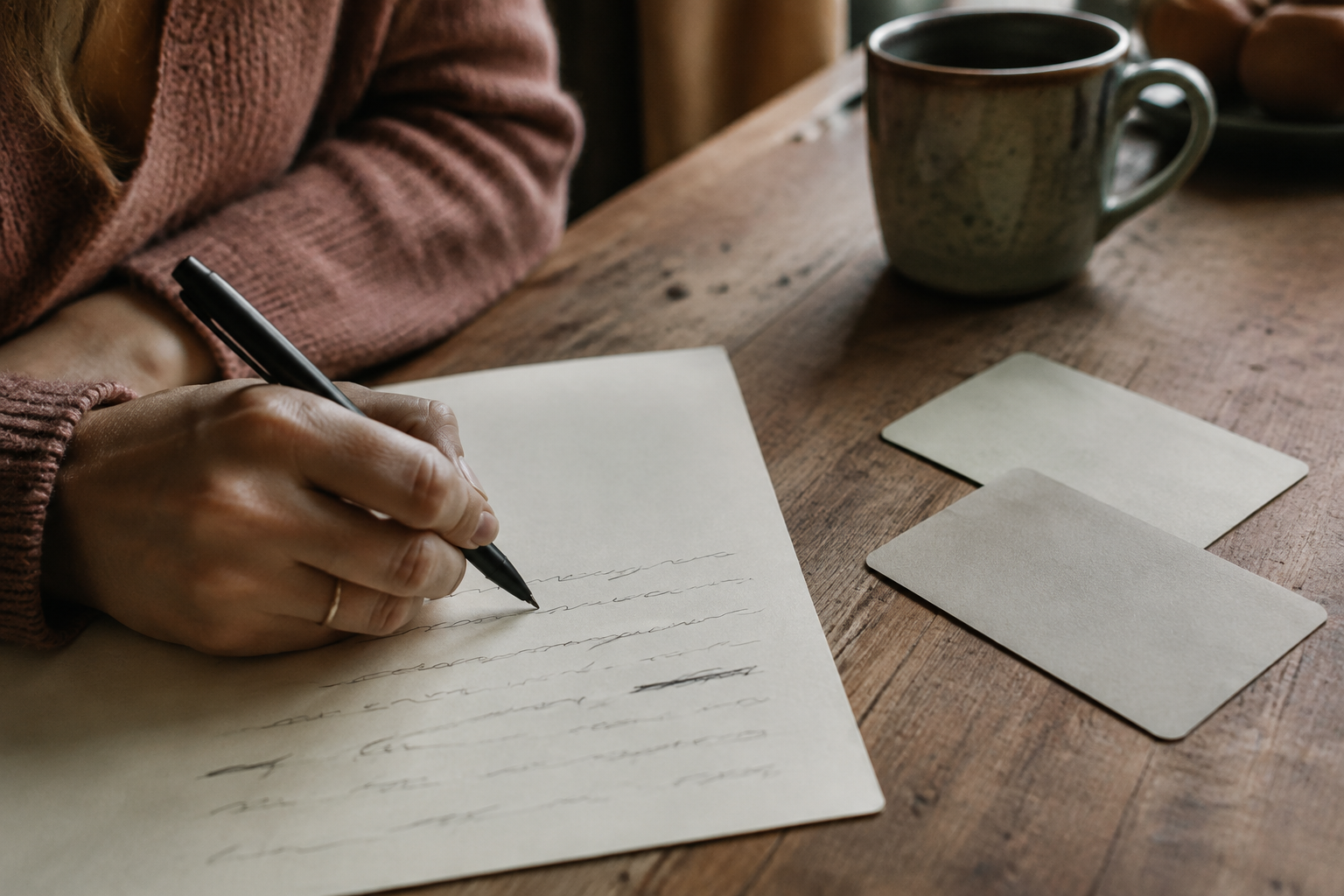
This is one of the dangers of writing by hand: the evidence remains.
There is no delete key.
You may draw one careful line through the mistake and continue. You may add a tiny correction above it. You may decide that the entire page is ruined and begin again, only to make a different mistake two paragraphs later.
But an imperfect letter is not a failed letter.
The crossed-out word, cramped final sentence, and slightly uneven lines are reminders that another person sat somewhere and made this by hand.
Digital communication encourages us to edit ourselves before anyone sees the uncertainty.
A handwritten letter allows some of that uncertainty to remain visible.
That vulnerability is part of its intimacy.
What If They Don’t Like the Letter?
Beneath all the smaller worries—what to write, how much to share, whether your handwriting looks strange—there is usually one larger one.
What if they do not respond the way you hope?
What if your humor does not land?
What if you share something meaningful and receive something lighter in return?
What if the connection simply is not there?
A first letter cannot promise chemistry, romance, or perfect understanding.
It can only create an opportunity.
That may feel vulnerable because it is. To write sincerely is to offer another person something they are free to receive, misunderstand, appreciate, or decline.
But meaningful connection has always required that kind of courage.
Not the dramatic courage of grand declarations.
The quieter courage of saying:
This is a little of who I am. I would like to know a little of who you are.
Begin Before You Feel Completely Ready
If you are waiting to feel entirely natural about writing your first letter to someone you have never met, you may be waiting for a very long time.
It is an unusual thing to do.
That is part of its charm.
Begin with the honest sentence.
Tell one story that reveals something real.
Ask a question you would genuinely enjoy answering yourself.
Do not worry about sounding fascinating. Pay attention to being interested.
Do not attempt to predict the entire future of the connection from the first exchange.
And do not discard a page simply because your handwriting tilted downhill near the bottom.
You are not auditioning for the role of perfect correspondent.
You are giving another person the chance to meet you slowly.
The first letter may feel awkward.
It may take longer than expected.
You may hover over the mailbox for several seconds before finally letting the envelope fall.
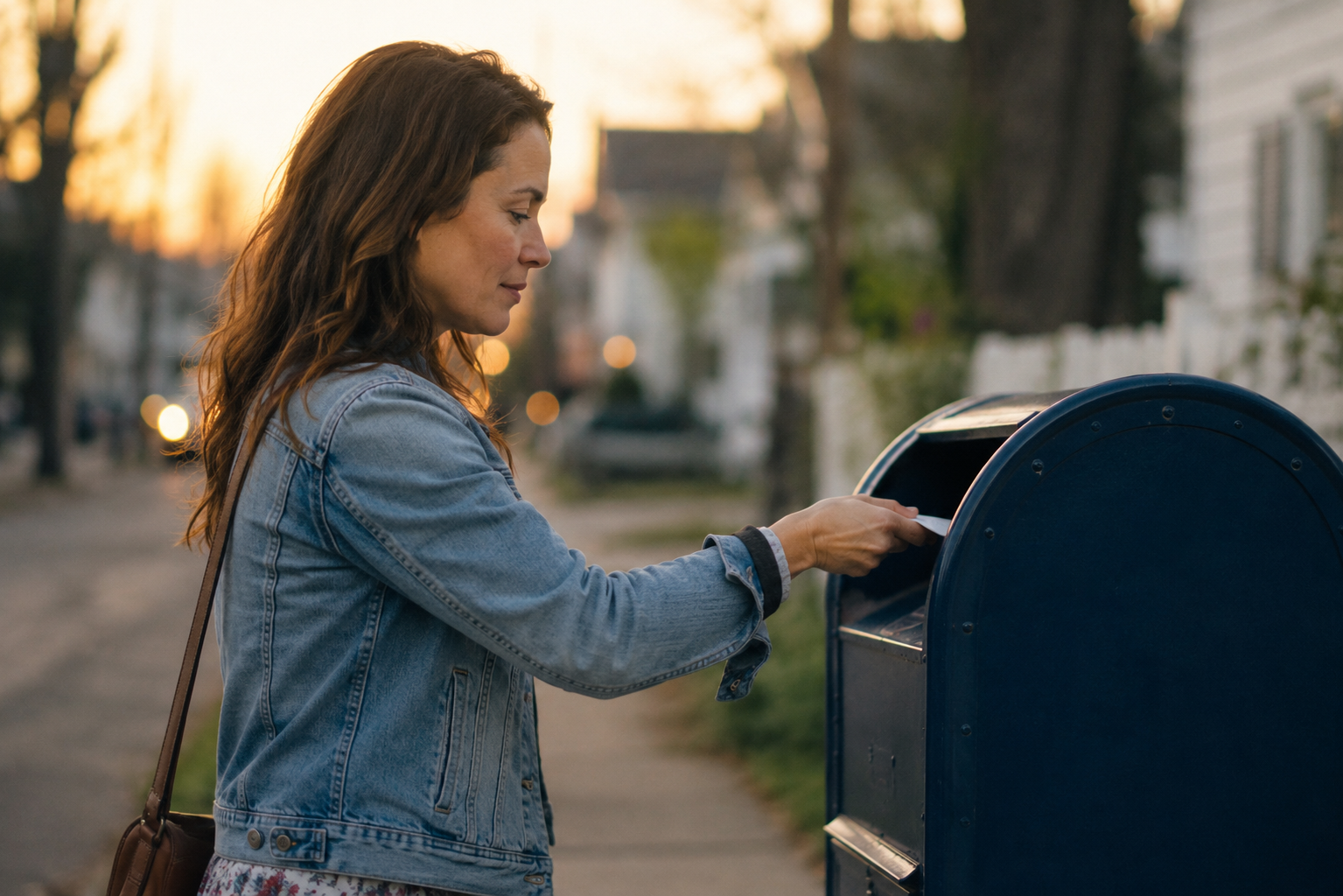
But after that small sound—the letter leaving your hand and beginning its journey—the blank page is no longer blank.
And neither is the story.
You don’t need perfect words to begin something meaningful
Dearly is a thoughtfully curated letter-writing experience for people who want to move beyond hurried introductions and discover someone through honest, handwritten conversation.
Not quite ready? Receive thoughtful stories, letter-writing inspiration, and occasional news from Dearly.
If the page still looks blank after the first line, we keep a longer list of things worth writing about.
A gift from the Diary
36 Questions Worth Asking Someone You Want to Know Better
A free guide from Dearly, made to keep close. For first letters, long drives, old friends, and the conversations you wish lasted longer.
Wish you had someone to write to?
Dearly thoughtfully pairs people for handwritten correspondence, and carries the letters between them — no addresses exchanged.