Dearly Diary
A small reminder that some of life's greatest moments have always arrived quietly.
When the Mailbox Held More Than Mail
The quiet wonder of looking forward to what was inside.
6 minute read · Correspondence & Connection
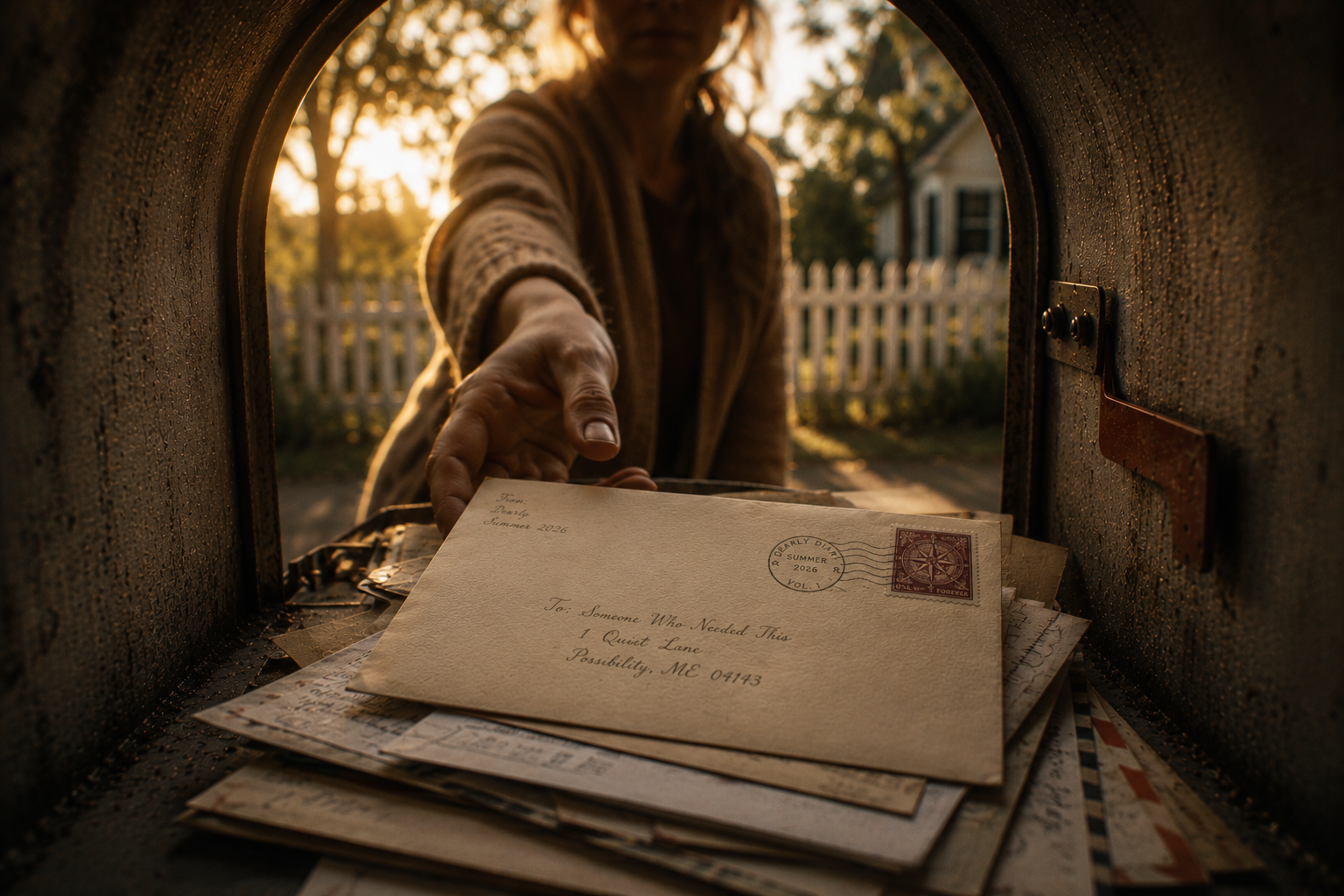
There was a certain time of day when the mailbox seemed to matter.
Maybe it was after school. Maybe after dinner. Maybe someone in the house casually asked, “Has anyone checked the mail yet?”
Whatever the routine, the walk never felt like a chore.
It felt like possibility.
Most afternoons there was nothing extraordinary waiting inside.
A utility bill.
A grocery flyer.
An advertisement addressed to “Current Resident.”
But every once in a while…
There was an envelope with your name on it.
A birthday card with five dollars folded inside.
A postcard from your grandparents’ vacation.
A letter from your best friend at summer camp.
Before you ever unfolded the paper…
Before you read a single word…
Before you even recognized the handwriting…
You already knew something important.
Someone had been thinking about you.
As the years passed, the envelopes changed, but the feeling never did.
Some of life’s biggest moments didn’t arrive with a notification.
They arrived in an envelope.
“Some of life’s biggest moments didn’t arrive with a notification. They arrived in an envelope.”
The mailbox quietly taught us one of life’s greatest pleasures: the anticipation of discovering that someone had been thinking about you.
Psychologists have long understood that happiness often begins before the moment itself. The mailbox worked the same way. The experience began with the walk down the driveway, the sound of the metal door opening, and the possibility that today might be the day.
Instant communication gave us speed.
Anticipation gave us stories.
This isn’t a story about wishing technology had never happened. It’s a story about wondering if, somewhere along the way, we quietly traded anticipation for immediacy.
We no longer wait.
We refresh.
We swipe.
We reply.
We move on.
A text message asks for your attention.
A handwritten letter asks for your time.
There’s a difference.
Every letter begins long before the first sentence.
It begins the moment someone decides you’re worth writing to.
“Every letter begins long before the first sentence. It begins the moment someone decides you’re worth writing to.”
They choose the paper. They find a quiet moment. They write. They fold the page. They address the envelope. They trust that a small part of themselves will arrive in your hands.
A letter carries fingerprints, imperfect handwriting, crossed-out words, coffee stains, fold marks, and tiny imperfections no font could ever recreate.
Maybe that’s why we keep old letters—not because paper is valuable, but because it quietly preserves a moment that would otherwise disappear.
Years later you can unfold the same piece of paper, recognize the same handwriting, and for a moment you’re standing in that version of your life again.
They’re more than paper.
They’re proof that, at one point in your life, someone paused long enough to write your name.
Maybe that’s what we’ve been missing all along.
Not the mailbox.
Not even the letters.
Just the quiet reassurance that somewhere, someone was thinking about us.
The beautiful thing is…
We don’t have to leave that feeling in the past.
The next letter someone treasures hasn’t been written yet.
The next reminder that someone matters could begin with a blank sheet of paper, a pen, and a little bit of courage.
Maybe the mailbox still holds more than mail.
Maybe it still holds possibility.
And maybe…
The next letter someone keeps will be the one you decide to write.
A Question to Carry With You
What's one letter you've kept all these years—and why couldn't you bring yourself to throw it away?
Longing for a more thoughtful way to connect?
Dearly brings people together through meaningful handwritten correspondence.
The same instinct applies to giving. We collected gifts for someone who doesn’t need more things.
Post is still the quietest way to keep a friendship alive across a distance — more on that in how to stay close to a long-distance friend.
A gift from the Diary
36 Questions Worth Asking Someone You Want to Know Better
A free guide from Dearly, made to keep close. For first letters, long drives, old friends, and the conversations you wish lasted longer.
Wish you had someone to write to?
Dearly thoughtfully pairs people for handwritten correspondence, and carries the letters between them — no addresses exchanged.