Dearly Diary
Non-Material Gifts: Meaningful Presents That Aren’t More Stuff
Eight categories, and how to choose between them.

8 minute read · Gifts & Thoughtfulness
There is a growing group of people who genuinely do not want another object. Some of them are minimalists on purpose. Most are simply adults in a full house who have quietly started dreading the unwrapping.
The usual advice — “give an experience!” — is right and almost useless, because experiences are only one of several non-material categories, and they are not always the correct one. A concert ticket is a wonderful gift for somebody with a free Saturday and a terrible one for a parent of a newborn.
So this is not another list of things to buy. It is a guide to the types of gift that leave nothing behind to store, and how to work out which type fits the person in front of you.
Why Non-Material Gifts Land Differently
Non-material gifts do two things an object usually cannot. They arrive without an obligation — nothing to dust, display, or feel guilty about keeping. And they extend in time, either forwards as anticipation or backwards as memory.
They also protect the relationship from the awkward middle ground of the wrong object: the vase that must be visible when you visit, the jumper in the wrong size, the gadget that replaces one they already liked.
The Eight Categories
Time
The rarest currency between adults. Not a vague offer, but a specific one: breakfast on the first Saturday of every month, written on a card with the dates already on it. Best for people you love who you never actually see.
Experiences
A class, a ticket, a trip, a meal booked. Strongest when it is something they have mentioned wanting but would never schedule for themselves. Check their capacity before their taste — an experience is also an obligation in the diary.
Anticipation
Anything that arrives later, or repeatedly: a subscription, a seasonal delivery, a booked visit six months out. The waiting is the gift. Ideal for someone whose year feels like a flat line of admin.
Memory
Photographs printed and bound. A recipe copied out in your handwriting. A recording of a grandparent telling one story. These take a weekend and no budget, and they are the gifts people call irreplaceable.
Learning
A single lesson in the thing they keep mentioning — pottery, sourdough, film photography, a language. Low commitment, high permission. It says: the version of you that does that thing is allowed to exist.
Rituals
A tradition started deliberately: the same book each winter, the same walk each solstice, the same call each month. A ritual is the only gift that gives itself again next year at no cost.
Consumables
Excellent oil, tea they would not buy, chocolate from the maker. It disappears, which is exactly the point — pleasure without residue. The safest non-material gift for someone whose home you have never seen.
Words
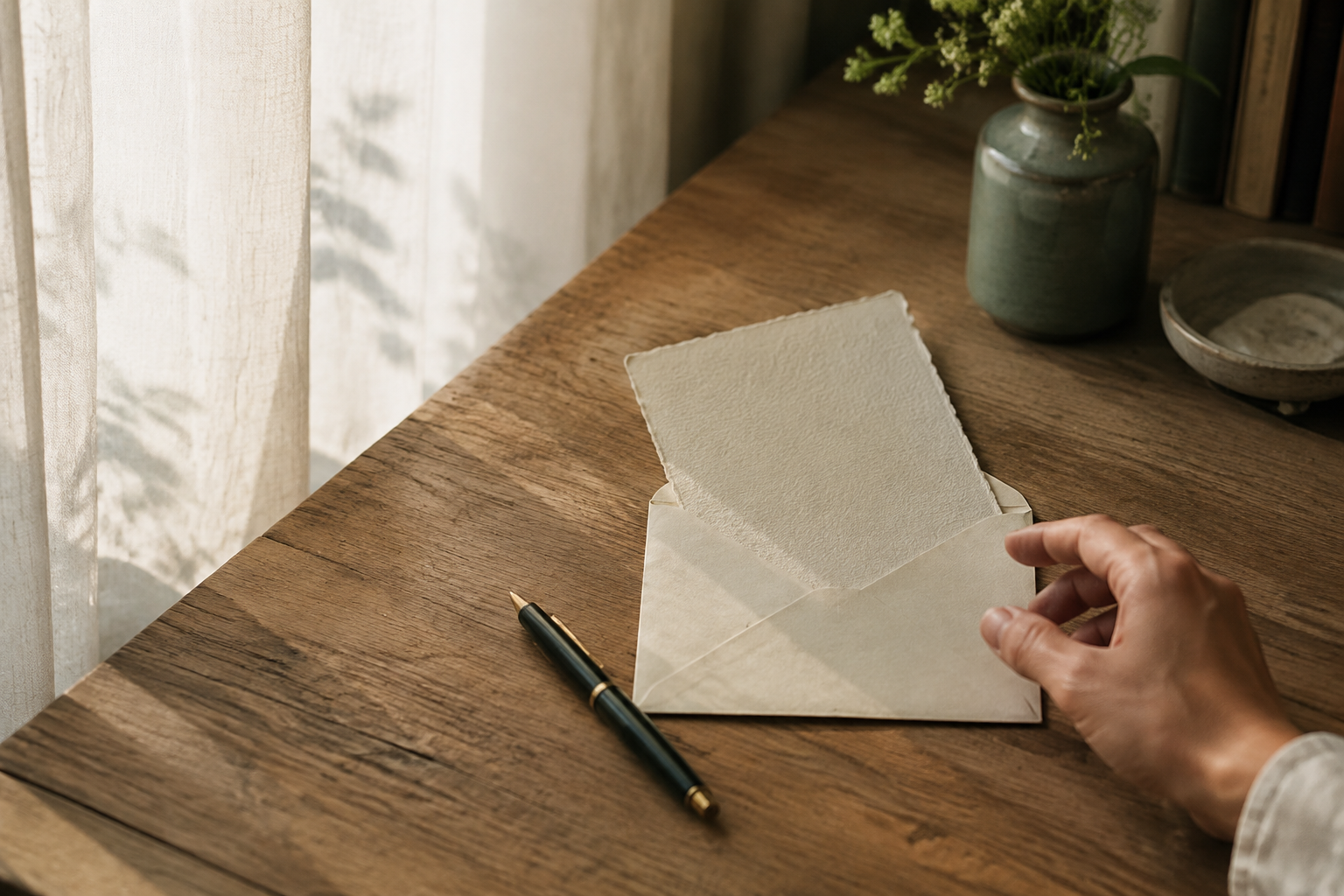
A letter, written by hand, saying the specific thing. What they did for you. What you noticed. What you have never said out loud. It costs a stamp and it is the item most likely to still be in a drawer in ten years.
How to Choose Between Them
If their calendar is full
Avoid experiences, which add an appointment. Choose consumables, words, or anticipation — gifts that wait patiently.
If their calendar is empty
Experiences, learning and rituals. What they are short of is a reason and a date, not an object.
If they live far away
Rituals, anticipation and words travel best. Anything requiring the two of you in one room needs a booked date attached or it becomes a promise instead of a gift.
If they are grieving or exhausted
Practical help and consumables. A delivered meal, a cleaner, a handled errand. Keep words short and specific; avoid anything that asks them to organise, attend or respond.
If they genuinely have everything
Memory and time. The two categories money cannot shortcut, and the reason they are stuck on your list at all.
How to Give Something You Cannot Wrap
The one real weakness of a non-material gift is the handover. A sealed envelope looks like nothing on a table of wrapped boxes, and children in particular will not thank you for a philosophy.
So give it a physical form. Print the dates on a card. Wrap the cookbook that goes with the class. Put the letter in a proper envelope with their name written properly. The object is not the gift; it is the gift’s body, and it matters on the day.
If you are shopping for one specific hard case, we have written the two we get asked about most: the person who has everything and the friend who lives far away.
A Note About Dearly, Clearly Labelled
For transparency: this is published by Dearly, a handwritten letter membership — firmly in the “words” and “anticipation” categories above. The gift version, the Gift of Letters, is something we are building and it is not open for purchase yet.
You can add your name to the gift list if you would like to hear when it opens. Nothing on this page requires it, and the handwritten version you do yourself remains the best value gift we know of.
Nothing to Store, Something to Keep
Non-material gifting is not austerity. It is the opposite: it assumes that what somebody actually wants is harder to get than a parcel, and then goes and gets it.
Give the afternoon, the tradition, the memory, the envelope. Nothing to store, and something to keep.
A gift from the Diary
36 Questions Worth Asking Someone You Want to Know Better
A free guide from Dearly, made to keep close. For first letters, long drives, old friends, and the conversations you wish lasted longer.
Wish you had someone to write to?
Dearly thoughtfully pairs people for handwritten correspondence, and carries the letters between them — no addresses exchanged.